• MSCA & Citizens · Horizon Europe

Bringing science closer to people through hospitals
Healthcare research reaches citizens

inHos brings biomedical research closer to society from a unique setting: the public hospital.

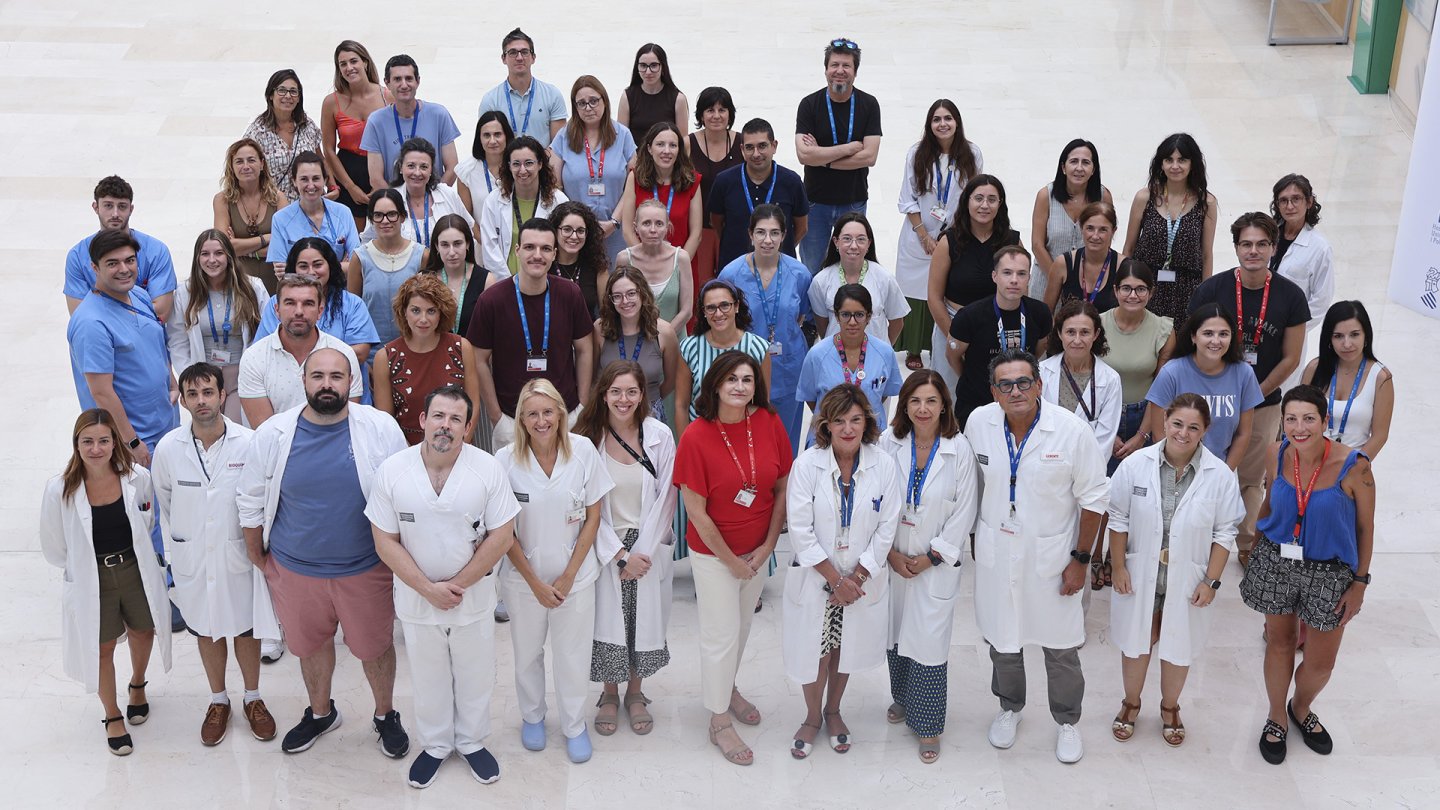
Researchers from hospitals and healthcare research centres across the Valencian Community step out of their laboratories and clinics to share their work with students, families, and the wider public.

Because research does not only take place inside hospitals, discover how it is part of your everyday life.

inHos participants

Researchers
Healthcare Professionals
Teachers and Educators
Hospitals
Primary Healthcare Centres

Students

Citizens
WHAT IS inHos?

Connecting Science and Society

inHos is a science communication network that brings healthcare research from public hospitals into classrooms, public spaces, and communities.

Every day, public hospitals and health research centres generate knowledge that helps prevent diseases, improve diagnoses, and develop new treatments. Yet much of this research remains unknown to many people.

inHos was created to change that reality. Through open activities with researchers, hands-on workshops, and visits to educational centres, inHos brings healthcare research closer to citizens and creates new opportunities for dialogue between science and society.

Its mission is to bring science closer to everyday life and show how research influences our health, well-being, and future.

The project aims to open hospitals to society and foster dialogue among researchers, educational institutions, public authorities, and local communities.

THE EUROPEAN UNION

From Valencia to Europe

inHos is part of a European initiative that brings research closer to citizens and promotes dialogue between science and society.

Horizon Europe
The European Union’s flagship research and innovation programme. It supports projects that help address major societal challenges such as health, sustainability, and digital transformation.

MSCA & Citizens

A European initiative that connects researchers and citizens through participatory, educational, and outreach activities. Its aim is to bring science closer to people and demonstrate its impact on everyday life.

Marie Skłodowska-Curie

A pioneer of modern science and the first person to receive two Nobel Prizes in two different scientific disciplines. Her name inspires one of Europe’s most important programmes supporting research and innovation.
Thanks to the support of the European Union, inHos connects hospitals, research, and citizens.

PARTICIPANTS

Who makes inHos possible?

COORDINATION

IIS la Fe

IIS La Fe promotes and coordinates inHos, leading the network of health research institutes and foundations across the Valencian Community that bring science closer to citizens.

PARTNER

Big Van Ciencia

A leading science communication organisation that designs and delivers participatory activities, science shows, and training programmes for researchers.A leading science communication organisation that designs and delivers participatory activities, science shows, and training programmes for researchers.

RED DE INSTITUTOS Y FUNDACIONES

Institutos de investigación sanitaria y fundaciones de los hospitales públicos de Valencia y Alicante.

Son ellos quienes salen al encuentro de la ciudadanía.

2026/2027/2028 | IIS LA FE


2026/2027 | FI HGU


2027/2028  | incliva


2027/2028 | fisabio


2027/2028 | ISABIAL


The Public
The true heart of inHos

Researchers come to you—elementary and middle school students, families, neighbors, and teachers.

Science goes where the people are, not the other way around.

objectives

Seven objectives,

one purpose

We want health research to be more visible, accessible, and relevant to everyone.

All objectives are achievable within 24 months, backed by the proven experience of the IIS La Fe’s “Tu Hospital Investiga” program.

01 Open hospital science to society

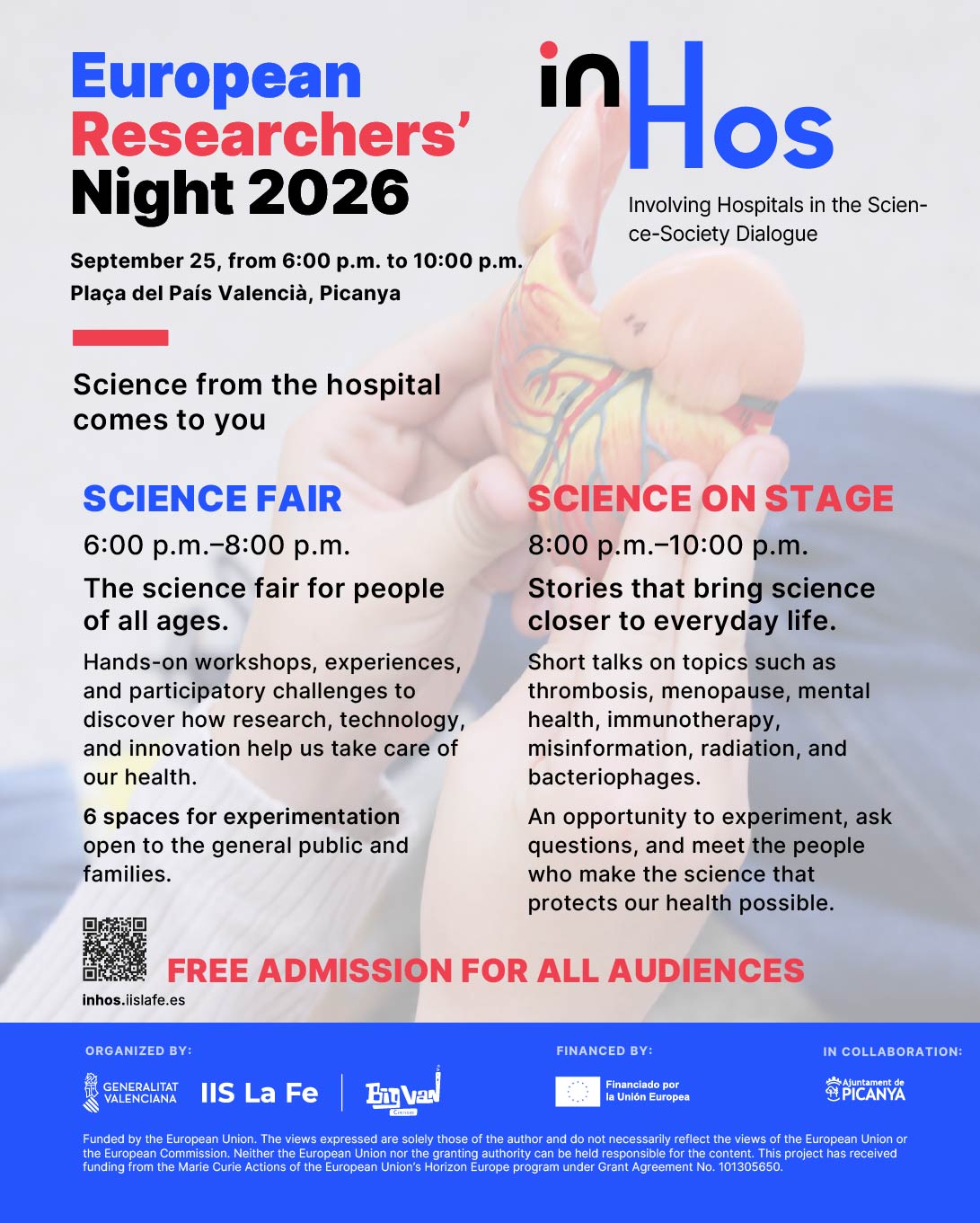
Two major editions of the European Researchers’ Night: one in areas affected by the 2024 floods and another in Valencia.

Through R@S, students will meet clinicians and researchers and develop critical thinking skills using balanced role models and gender-sensitive narratives.

All activities are adapted for people with disabilities, older adults, and underrepresented groups, following the principles of universal design.

Surveys, interviews, and focus groups to collect qualitative and quantitative data on perceptions and expectations regarding science.

Evidence-based, transferable resources to engage the public in biomedical research within hospital settings.

Their stories will be highlighted through branding, audiovisual materials, public talks, and school visits.

Integrate successful formats into long-term strategies with schools, hospitals, local governments, and patient associations.

ACTIONS

How are we going to achieve this?

Four pillars, two major actions

probeta

Biomedical Research

The research conducted every day in hospitals and research centers.

book

MSCA & Citizens

Creative, participatory, and accessible formats to bring science closer to the public.

heart

Inclusion and Accessibility

Universal design and the participation of diverse groups in every activity.

world

Trust in Science

Listening, engaging in dialogue, and building a closer relationship between research and society.

Two Major Initiatives

ERN

European Researchers’ Night

Researchers take over the square. Booths featuring workshops for elementary school children, hands-on demonstrations, and, as night falls, informative talks for all audiences.

Two editions: 2026 in Picanya (L’Horta Sud) and 2027 in Malilla, Valencia.

r@s

Researchers at Schools

Researchers go to the schools, not the other way around. More than 80 researchers are available to visit elementary and middle school classrooms with workshops, demonstrations, and direct dialogue.


EXPECTED REACH

The impact in numbers

>5.000

people in the ERN

across 2 editions

A night of science on the street.

2.000+

students in classrooms

with a researcher in class

Some will change their career paths.

43.000+

students reached

through the school program

That’s almost enough to fill Mestalla Stadium.

900K+

people reached through media and digital channels
Science reaches further.

80+

researchers involved from the hospital network
Each with a name, a face, and a story.
Open Science

All results published in open access. FAIR principles, repositories such as Zenodo, permissive licenses for maximum reuse.

Inclusion and Participation

We bring research to the entire community through open, inclusive, and accessible activities for diverse audiences.

Collaborative Network

Regional hospitals, schools, government agencies, patient associations, and educational communities form a network for shared knowledge.

We want every child at a school in Valencia to have the chance to meet a researcher in person. We want science to be something that’s not just happening far away.

NEWS

NEWS

Scroll to Top