
European Researchers’ Night 2026
On 24 and 25 September 2026, the ERN 2026 Science Fair will take place in Picanya (L’Horta Sud), bringing together primary and secondary school students with researchers and healthcare professionals to discover how science is carried out in hospitals.
Through workshops, experiments, simulations and team challenges, students will explore blood cells, reconstruct DNA sequences, investigate brain health, analyse data, follow the journey of a biological sample, learn about bacteriophages, and discover new ways to study cancer and develop medicines.
The same programme of activities will be repeated on both days, making it easier for different schools to participate.
The event will also feature the EU Corner: European Science, Local Impact, an interactive space where attendees can learn how the European Union supports research, discover the Marie Skłodowska-Curie Actions, and propose new European projects to address major health challenges.
The Science Fair is part of inHos, a European project coordinated by IIS La Fe, which opens hospital research to society and shows how science contributes to well-being, resilience and social cohesion within our communities.
Two days, one shared mission: to investigate, experiment and discover the science that cares for people.
Science Shows for Students: Clowntifics
Activities for primary school groups featuring science, humour and impossible experiments.
The scientific show by Big Van Ciencia, designed for primary school students.
Orilo and Harlequina, two scientists from the LABORATODELMUNDORIO, face the challenge of preparing the largest and most universal set of scientific experiments ever created.
Morning activities’ map
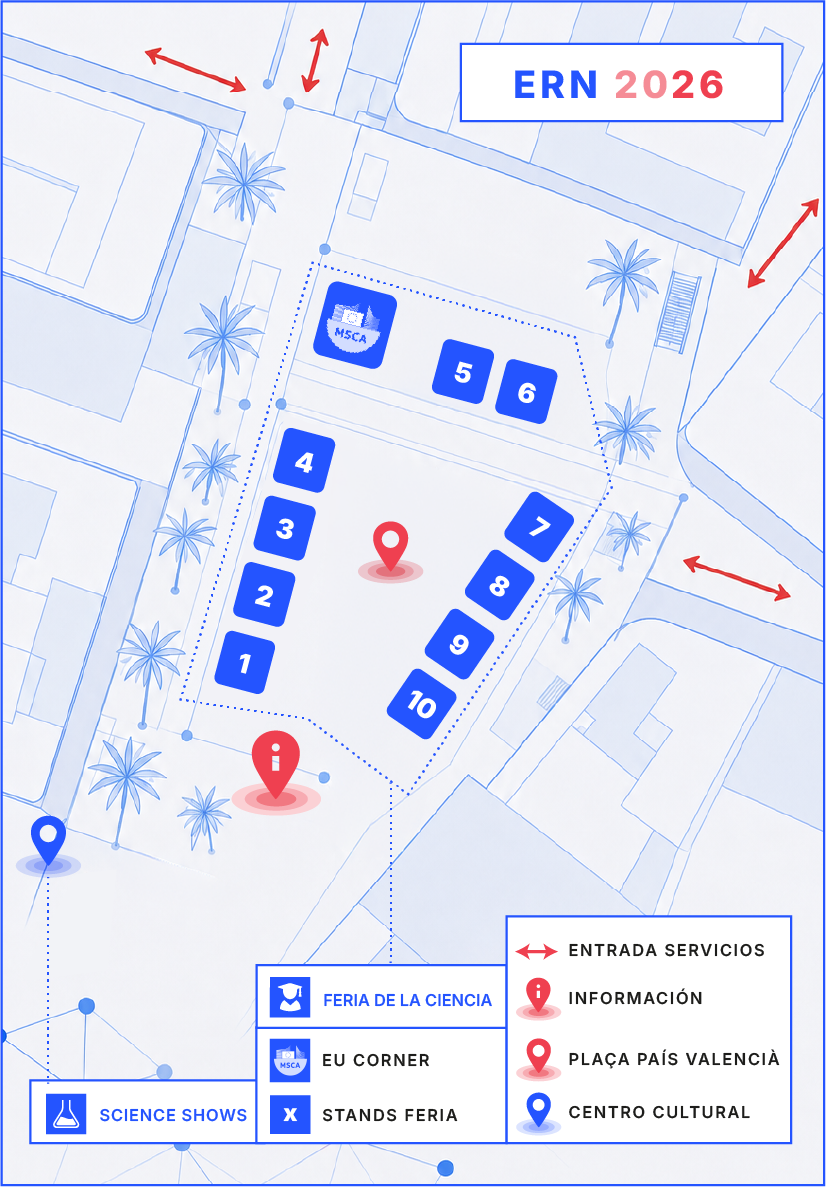
The ERN 2026 Science Fair will bring hospital research closer to primary and secondary school students through experiments, demonstrations, simulations and hands-on challenges.
Across both days, researchers and healthcare professionals will demonstrate how science helps us understand disease, improve diagnoses, develop treatments and address major social and health challenges.
The activity is part of inHos, a project that opens hospital science to society and highlights how research contributes to the well-being, resilience and cohesion of communities affected by the 2024 floods.
PLAÇA DEL PAÍS VALENCIÀ – PICANYA
Talleres
01Inside Blood: Discover Its Cells
Team: Haematology | Audience: Primary School
Una experiencia práctica para conocer las principales células de la sangre, entender para qué sirven y comparar una muestra sana con ejemplos de anemia, trombocitopenia y leucemia mediante modelos e imágenes.
02The DNA Puzzle: Find the Mutation
Team: Haematology | Audience: Primary and Secondary School Students
Students will reconstruct small DNA sequences as if they were solving a puzzle. Through this hands-on activity, they will discover how genetic mutations are identified and why bioinformatics and computer technologies are essential tools for studying the human genome.
03Brain Detectives: Clues to Keeping It Healthy
Team: Alzheimer’s Disease Research Group (GINEA) | Audience: Secondary School Students
A team-based challenge designed to help students identify habits that support brain health and recognise modifiable risk factors associated with Alzheimer’s disease. Using images, classification activities and active learning techniques, participants will explore how lifestyle choices can influence long-term cognitive health.
04The Science of Happiness: What Does the Data Say?
Team: Big Data, AI, Biostatistics and Bioinformatics | Audience: Primary and Secondary School Students
05Biobank Mission: The Secret Journey of a Sample
Team: La Fe Biobank | Audience: Primary and Secondary School Students
A team competition that follows the real-life journey of a biological sample, from collection and transport to processing, storage and selection for research projects. Each stage of the process is completed through challenges, puzzles and problem-solving activities.
06Phages: Tiny Viruses, Powerful Allies
Team: Severe Infection Research Group | Audience: Primary and Secondary School Students
Three interactive stations designed to explore antibiotic resistance, understand the structure and specificity of bacteriophages, and discover how these viruses can target and destroy specific bacteria.
07The CAR-T Squad: Super Defences Against Cancer
Equipo: Investigación Traslacional en Cáncer | Público: Primaria
A scientific mission that helps children discover how the immune system works and how CAR-T therapy enables T cells to recognise and attack cancer cells. The activity includes role-playing exercises, receptor-building challenges and ultraviolet light experiments to make complex concepts engaging and easy to understand.
08Cells Under Suspicion: Choose the Treatment
Team: FIHGUV Oncology | Audience: Primary and Secondary School Students
Students will become part of a research team tasked with identifying tumour cells and deciding, within an educational simulation, which therapeutic strategy may be the most suitable based on the characteristics of each case.
09Anti-Acidity Mission: Choose the Best Drug
Team: Drug Discovery Unit | Audience: Primary and Secondary School Students
Students will explore how different medicines used to treat gastric acid-related conditions work. Through team-based challenges and decision-making activities, they will compare the characteristics of various treatments, select the most appropriate option for different simulated scenarios, and learn about some of the key stages involved in drug discovery and development.
10Microbes Under the Microscope: Friends and Tiny Culprits
Team: Microbiology, TREMP | Audience: Primary and Secondary School Students
Participants will learn about both beneficial microorganisms and those that can cause disease. Through interactive activities, they will match different microbes to the parts of the body they affect and observe microbial cultures and microscope slides to better understand how microorganisms influence human health.
EUEU Corner: European Science, Local Impact
EU Corner: International Office | Audience: All Audiencess
The European and participatory space of the Fair offers visitors the opportunity to discover how the European Union promotes scientific collaboration, funds research projects, and supports the professional development of researchers. Through questions, polls and interactive activities, students will learn about the Marie Skłodowska-Curie Actions, the legacy of Marie Curie, and the connection between inHos, the European projects of IIS La Fe, and major health challenges.
- Unión Europea e investigación: ¿Qué reto crees que Europa debería investigar unida?
- Imagina un proyecto europeo: Si pudieras crear un proyecto europeo, ¿qué problema te gustaría resolver?
- Marie Skłodowska-Curie Actions: ¿Qué necesita una persona investigadora para crecer?
- La huella de Marie Curie: ¿Dónde crees que sigue viva hoy la huella de Marie Curie?
- inHos y la investigación hospitalaria: ¿Sabías que en los hospitales también se investiga?
- IIS La Fe y los proyectos europeos: ¿Qué reto de salud te gustaría que investigara Europa desde centros como el IIS La Fe?
The ERN 2026 Science Fair opens its afternoon programme to families and the general public with hands-on workshops, visual experiences and participatory challenges that bring hospital research closer to everyday life.
Researchers and healthcare professionals will show how scientific evidence, technology and innovation help prevent health risks, better understand the human body, improve diagnoses and develop new approaches to care and treatment.
From 6:00 pm to 8:00 pm, visitors will be free to explore six activity stations.
PLAÇA PAÍS VALENCIÀ – picanya
01Healthcare Through Science: Small Actions That Protect Your Health
Team: Picanya Health Centre | Audience: All Audiences
A primary healthcare consultation room becomes an interactive learning space where visitors can discover the science applied every day in health centres.
Through participatory demonstrations, attendees will learn how vaccines and antibiotics work, practise effective handwashing and wound care, and discover how cardiovascular risk is assessed.
The experience: Four mini-workshops in one space: vaccines and antibiotics, handwashing, wound care, and cardiovascular risk assessment.
02The Biopsy Route: From Patient to Microscope
Team: PCT Cell Biology | Audience: All Audiences
Participants will follow the journey of a biopsy through the laboratory and discover the essential steps required to prepare it for microscopic examination: fixation, dehydration, embedding, sectioning and staining. After exploring materials from each stage of the process, they will examine biopsy samples from different tissues and take on the challenge of identifying the organ from which they originate.
The experience: Observation of laboratory materials, images and microscope biopsy samples, culminating in a challenge to recognise different tissues and organs.
03CPR: Science Saving Lives
Equipo: Enfermería y Comisión RCP | Todos los públicos
¿Qué harías si alguien sufriera una parada cardiaca? En este reto práctico, el público aprenderá a reconocer una emergencia y practicará compresiones torácicas con maniquíes de RCP. Un sistema de medición en tiempo real permitirá comprobar y mejorar la técnica mediante el trabajo en equipo. La actividad mostrará también que las pautas actuales de reanimación se basan en la evidencia científica y evolucionan gracias a la investigación y la innovación sanitaria. Estos avances permiten perfeccionar las técnicas de RCP, desarrollar sistemas de monitorización y contribuir a mejorar la respuesta ante una parada cardiaca y la supervivencia.
La experiencia: Simulación guiada de una emergencia, práctica con maniquíes y mejora de las compresiones mediante información en tiempo real.
04Snakes and Ladders: Reduce Your Exposure
Team: Experimental Hepatology and Liver Transplantation | Audience: All Audiences
A giant board game designed to help participants discover where endocrine disruptors may be found and what everyday choices can help reduce exposure. As they move across the board, participants will identify potential sources of exposure, answer questions, and choose between different options related to food, packaging, cosmetics and other common products.
The experience: A snakes-and-ladders-style game featuring questions, decision-making challenges and board spaces focused on potential sources of exposure and everyday habits.
05Radiation Detectives: Traces Left Inside the Body
Team: GIBI230 and the Radiation Protection Service | Audience: All Audiences
How can we tell whether a person has been exposed to radiation? This interactive experience explores how radiation affects cells, how potential exposure is assessed, and the scientific tools used to protect people from its effects. Participants will learn about radiobiology, radiation protection, biodosimetry, and current research into radioprotective substances.
The experience: An engaging demonstration featuring biological indicators of radiation exposure, radiation protection measures, and research on radioprotective compounds.
06The Medical Imaging Challenge: What Do You See Here?
Team: GIBI230 | Audience: All Audiences
A visual and interactive experience exploring how medical imaging helps researchers and clinicians investigate, diagnose and better understand the human body. Participants will be challenged to identify anatomical structures, compare images before and after artificial intelligence processing, and discover the phantoms and 3D models used to safely test and validate imaging technologies.
The experience: Image interpretation challenges, artificial intelligence demonstrations, and hands-on observation of phantoms and 3D models.
Afternoon activities’ map
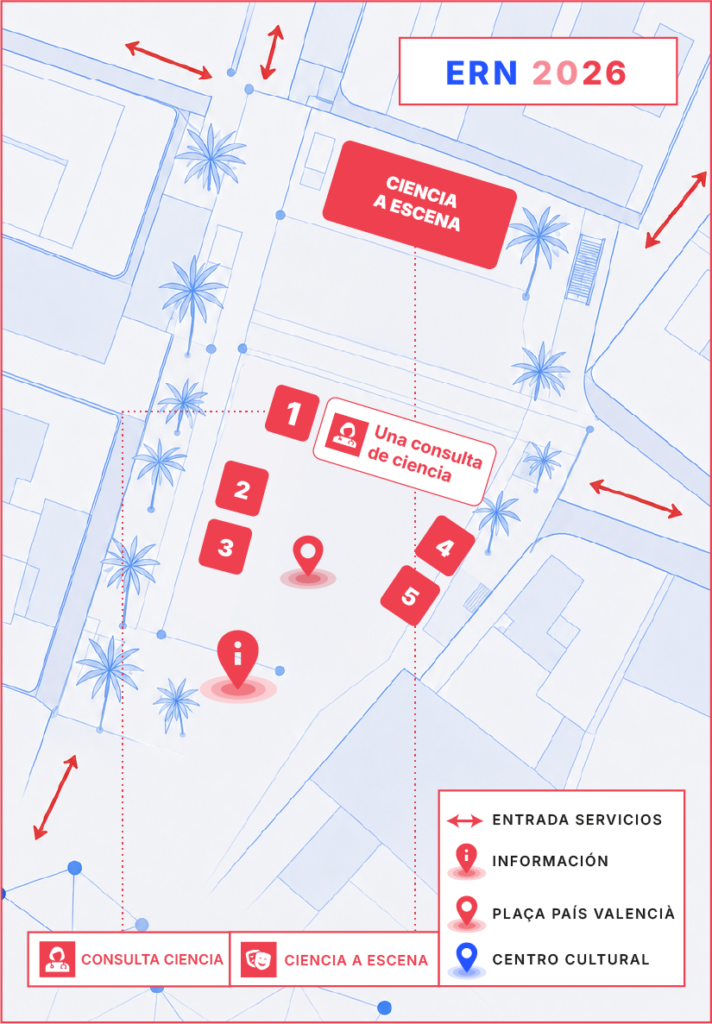
A series of short talks presenting biomedical research through engaging, accessible and surprising stories.
At 8:00 pm, Science on Stage will bring audiences stories about thrombosis, fertility, misinformation, immunotherapy, mental health, radiation, emerging fungi and bacteriophages.
An inHos activity designed to encourage participation, questions and direct interaction with the people who make science-driven healthcare possible.
PLAÇA PAÍS VALENCIÀ – picanya
01A Trap Within Me
Speaker: Emma Plana Speaker: Emma Plana | Research Area: Haemostasis, Thrombosis, Atherosclerosis and Vascular Biology
Neutrophils protect us from infection by releasing networks capable of trapping microorganisms. However, when these traps become activated during inflammatory processes, they can also contribute to thrombus formation.
This talk will explain how researchers study these mechanisms to identify risk signals and develop new strategies for prevention and treatment.
02Their Batteries Don’t Run Out, and Theirs Don’t Last Forever
Speaker: Adrián Villalba | Research Area: Reproductive Medicine and Fertility
Science shows that ageing influences the reproductive capacity of both women and men, although this is not always discussed in the same way. This talk will explore common beliefs about age and fertility and explain, based on scientific evidence, why menopause is a natural biological transition and how male fertility also changes over time.
03Would You Trust Just Any Influencer?
Speaker: María José Herrero | Research Area: Pharmacogenetics
Social media, eye-catching headlines and advice without scientific evidence compete for our attention every day. This talk encourages critical thinking and explores how the questions at the heart of the scientific method can help us identify reliable information, recognise signs of misinformation, and make better-informed decisions.
04How to Make Immunotherapy in a Thermomix
Speaker: JC García Cañaveras | Research Area: Biomarkers and Precision Medicine Unit
Cellular immunotherapy has revolutionised the treatment of certain cancers. Its production can be compared to following a recipe, where the right ingredients must be selected, every step carefully monitored, and the process continuously adjusted along the way. This talk will show how researchers are developing new quality-control measures to improve the preparation of T lymphocytes used in immunotherapy.
05Is It Ageing, or Should We Ask for Help?
Speaker: Antonio Jovani | Research Area: Mental Health
Adolescence is a period of significant change, but some intense, sudden or persistent signs may indicate that a person needs support. This talk will help distinguish between common developmental challenges and potential warning signs, while explaining why listening, early detection and seeking professional help can improve mental health outcomes.
06Silent Radiation
Speaker: Alegría Montoro | Research Area: GIBI230
Radiation is part of our environment, but not all exposures carry the same level of risk. Beyond well-known nuclear accidents such as Chernobyl and Fukushima, some of the radiological incidents involving the highest exposure doses and most significant consequences for human health have occurred in industrial settings. This talk will explore how radiation exposure is assessed, the effects it may have on the body, and how research and radiation protection practices help prevent risks and safeguard public health.
07Phages to the Rescue: Viruses Against Resistant Bacteria
Speaker: María Ángeles Tormo | Research Area: Severe Infection
Bacteriophages are viruses that can infect specific types of bacteria. This microtalk will explain how they work, why each phage is able to recognise particular microorganisms, and how research is exploring their potential as a tool to combat antibiotic-resistant bacteria.
08Research Also Has Four Legs
Speaker: Viviana Bisbal | Research Area: Experimental Surgery and Animal Models Platform (PCEMA)
What do a mouse, a zebrafish, and a rabbit have to do with some of the greatest advances in medicine and science? In this monologue, we will explore the role that animals have played, and continue to play, in scientific research, and why they are still necessary in certain areas.
A look at science from a perspective we rarely see: that of those who have also been part of its story.
09A Night at the Museum
Speaker: Raquel Amigo | Research Area: La Fe Biobank
The Prado Museum and the Louvre Museum house fascinating collections that help us understand our history. But can you imagine a museum whose collections could help improve people’s health? Such a museum exists. It is full of life and is called the La Fe Biobank.
Join us to discover what biobanks are, the scientific treasures they preserve, and how anyone can contribute to research through the donation of biological samples.
During these two days, the town will become a large science communication venue where hundreds of schoolchildren can experience research in a new way: participatory, surprising and fun.
Expected Impact
What do we expect from the European Researchers’ Night?
Science made More Accessible
Biomedical and hospital research is brought closer to the public in an accessible, participatory, and understandable way.
More People Pursuing Scientific Careers
Children and young people discover role models and opportunities in STEAM disciplines.
An Informed Public
Greater knowledge about health, prevention, biomedical research, and healthcare innovation.
Participation and Inclusion
Open and accessible activities for diverse audiences that foster a more inclusive science.
Visible Researchers
Greater recognition of the work of researchers at hospitals and healthcare research centers.
Trust in Science
Strengthening the link between research, the healthcare system, and society.
Lasting Legacy
New opportunities for dialogue and collaboration between science, health, and the public beyond the event.
Other Activities

Researchers at Schools
Researchers come to the school—not the other way around. More than 80 researchers are available to visit elementary and middle school classrooms with workshops, demonstrations, and direct dialogue.
Want to know more?
If you have any questions about the project or its activities, write to us and we’ll get back to you.